
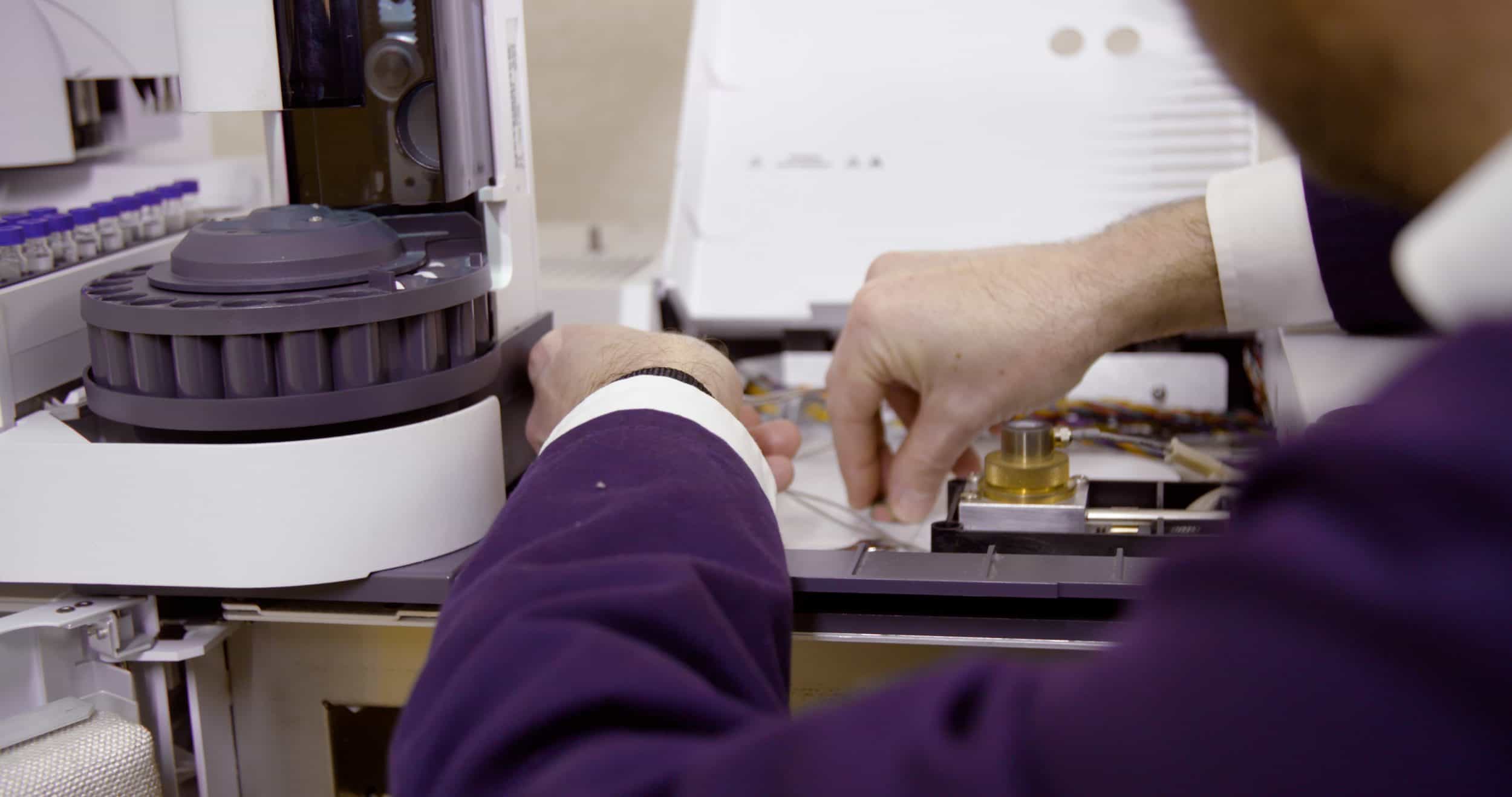
A practical maintenance checklist to keep HPLC and GC systems compliant, accurate, and available in pharmaceutical labs. Includes tasks, records, and escalation rules.
Why Preventive Maintenance Matters
Preventive maintenance protects data integrity, reduces out of specification risk, and keeps instruments available for routine testing. A planned program is faster and cheaper than emergency repair, and it gives auditors confidence that your results are reliable.
Safety And Preparation
-
Verify lockout and tagout where required.
-
Confirm solvent labels, gas purity, and ventilation.
-
Use calibrated tools and keep certificates on file.
-
Warm up systems to stable baseline before checks.
-
Save configurations and back up methods and sequences.
HPLC Preventive Maintenance
Daily Or Weekly
-
Inspect for leaks at pump heads, fittings, and the detector flow cell.
-
Check pressure stability and noise on a blank run.
-
Flush buffers with water at the end of day, then flush with organic as specified.
-
Verify mobile phase levels and degassing performance.
-
Review system suitability from routine runs.
Monthly
-
Replace pump seals and check valves as needed based on stroke counts or hours.
-
Clean or replace inline filters and frits.
-
Verify flow accuracy with a gravimetric or volumetric check.
-
Check autosampler needle and seat for wear and carryover.
-
Clean detector flow cell and verify lamp energy or intensity.
-
Confirm oven temperature accuracy with a traceable thermometer.
Quarterly
-
Replace lamp if intensity trend approaches limit.
-
Verify wavelength accuracy using a certified reference.
-
Perform gradient accuracy and composition checks.
-
Inspect all tubing and fittings for compression marks and replace where needed.
-
Run a full system performance test with a standard mix and compare to trend limits.
Annually
-
Replace pump diaphragms or pistons if applicable.
-
Replace autosampler syringe and rotor seal where fitted.
-
Replace column compartment fan filters if present.
-
Perform comprehensive flow, pressure, gradient, and detector verification with documented acceptance criteria.
-
Review maintenance logs, system suitability trends, and deviation records, then update the plan.
GC Preventive Maintenance
Daily Or Weekly
-
Check gas pressures, flows, and split ratio.
-
Run a leak test at the inlet and column connections.
-
Inspect septa and liners and replace when contamination or bleed appears.
-
Verify oven temperature program and equilibration.
-
Review detector baseline and noise.
Monthly
-
Replace septa at a defined injection count.
-
Replace liners, wool, and ferrules as per method or count.
-
Trim the column inlet end to remove contamination.
-
Verify carrier gas flow with a calibrated meter.
-
Check detector response and linearity with a standard.
Quarterly
-
Verify oven temperature accuracy and ramp rate with a traceable thermometer.
-
Clean detector jets where applicable.
-
Inspect and clean split vent and gas filters, replace if pressure drop is observed.
-
Perform an extended performance test with standard mixtures and update trends.
Annually
-
Replace gas purification traps based on pressure drop or time in service.
-
Inspect valves and actuators on headspace or purge and trap systems.
-
Replace critical inlet parts and o rings.
-
Perform a comprehensive performance verification including flow, temperature, and detector checks with acceptance criteria and reports.
Link PM To Calibration And System Suitability
-
After PM, run a defined verification set to show the system is fit for use.
-
Record accuracy for flow, temperature, and wavelength or detector response.
-
Confirm system suitability against method limits before release to routine work.
-
File raw data, calculations, and approvals in controlled storage.
Spare Parts And Consumables To Keep On Hand
HPLC: Pump seals, check valves, piston wash supplies, frits, inline filters, autosampler syringe, needle, rotor seal, detector lamps, fitting kits, solvent filters.
GC: Septa, liners, wool, ferrules, spare columns, inlet seals and o rings, detector jets, gas traps, leak detector fluid or electronic leak detector supplies.
Both: Certified reference materials, calibrated flow meters and thermometers, cleaning solutions, lint free wipes, gloves, labels.
Documentation And Data Integrity
-
Use controlled PM checklists with version control and acceptance criteria.
-
Record part numbers, lot numbers, and serial numbers for replaced items.
-
Attach certificates for tools and standards to the activity record.
-
Capture software settings, user roles, and backup locations when changed.
-
Log deviations and corrective actions with impact assessment on data.
When To Escalate To Repair Or Requalification
-
Repeated failure of verification tests after PM.
-
Unusual noise, drift, or vacuum issues that do not respond to routine steps.
-
Major module replacement such as pump heads, detector cells, inlets, or detectors.
-
Significant software upgrades or security configuration changes.
-
Instrument relocation or extended storage.
Escalation may require limited OQ checks or full OQ with selected PQ depending on risk.
Example PM Cadence You Can Adopt
-
Routine checks each week by the instrument owner.
-
Monthly tasks by a trained technician with supervisor review.
-
Quarterly verification with trending and a short report.
-
Annual comprehensive service with documented verification and updated risk review.
How Chrom Technology Can Help
Chrom Technology provides preventive maintenance for HPLC and GC in GMP laboratories along with traceable calibration and verification runs. We supply parts, perform the work, and deliver audit ready documentation so your systems return to service on schedule.
Ready to set up an annual maintenance plan. Share your instrument list and target dates. We will propose a clear scope with timelines and deliverables.